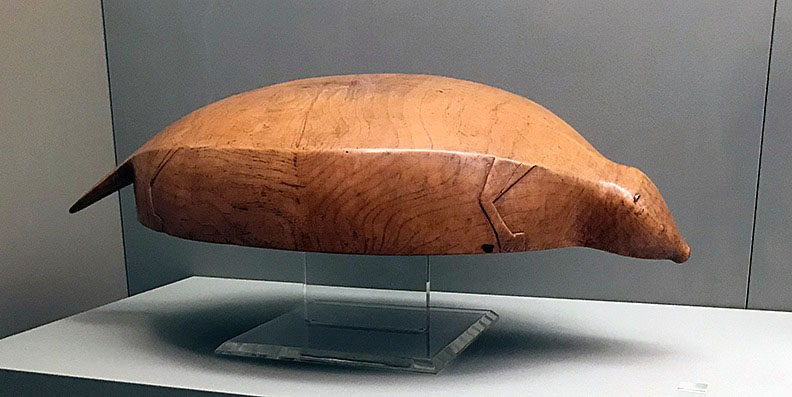
I am a huge fan of the Detroit Institute of Arts and visited recently. Highlights for me included this “Bowl in the Form of a Beaver,” 1790-1800, attributed to the Ojibwa (Anishnabe) culture of Michigan and Ontario.

“The Jewish Cemetery,” 1654-55, Jacob Issaksz van Ruisdael. Amsterdam had a large Jewish community with its own cemetery in a nearby village; the crumbling tombs in the imaginary storm-swept setting are meant to suggest that no matter what man accomplishes, everything passes away except nature itself.
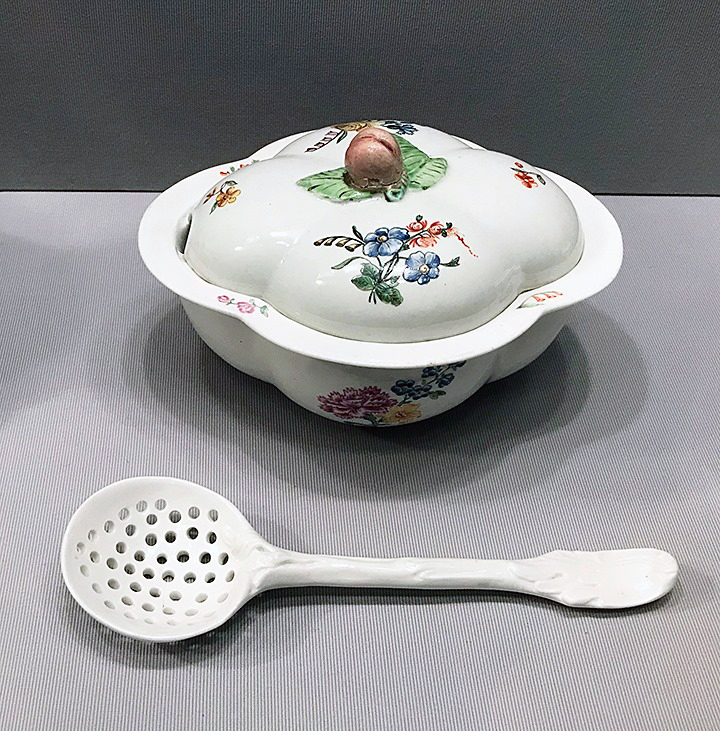
Brilliant design! Powdered sugar spoon with sugar bowl, about 1760, soft-paste porcelain with enamel decoration from the Chantilly Manufactory, France.
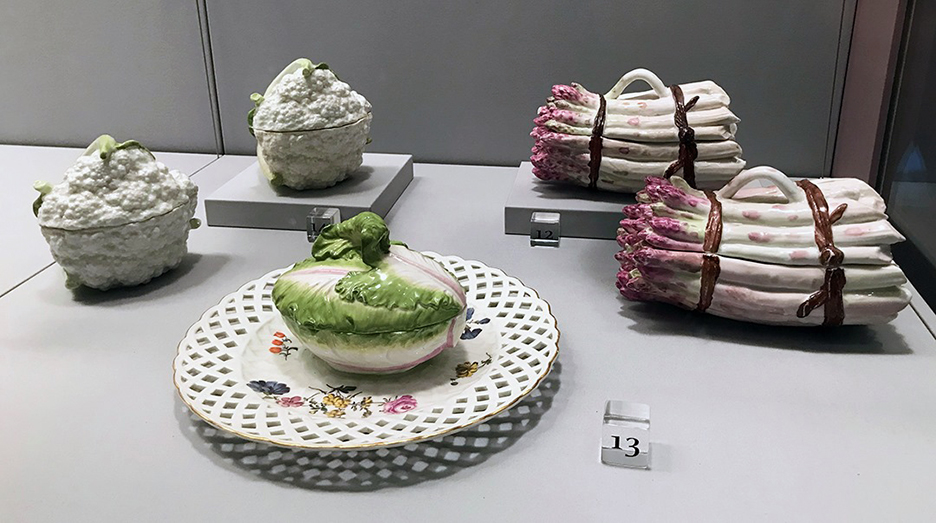
Asparagus tureens and cauliflower tureens, 1755, soft-paste porcelain with enamel decoration, Chelsea Manufactory, England; lettuce tureen on stand, 1745, hard-paste porcelain with enamel decoration and gilding, Meissen Manufactory, Germany. The dishes did not necessarily match contents; you could open one and find beef gravy, for example.
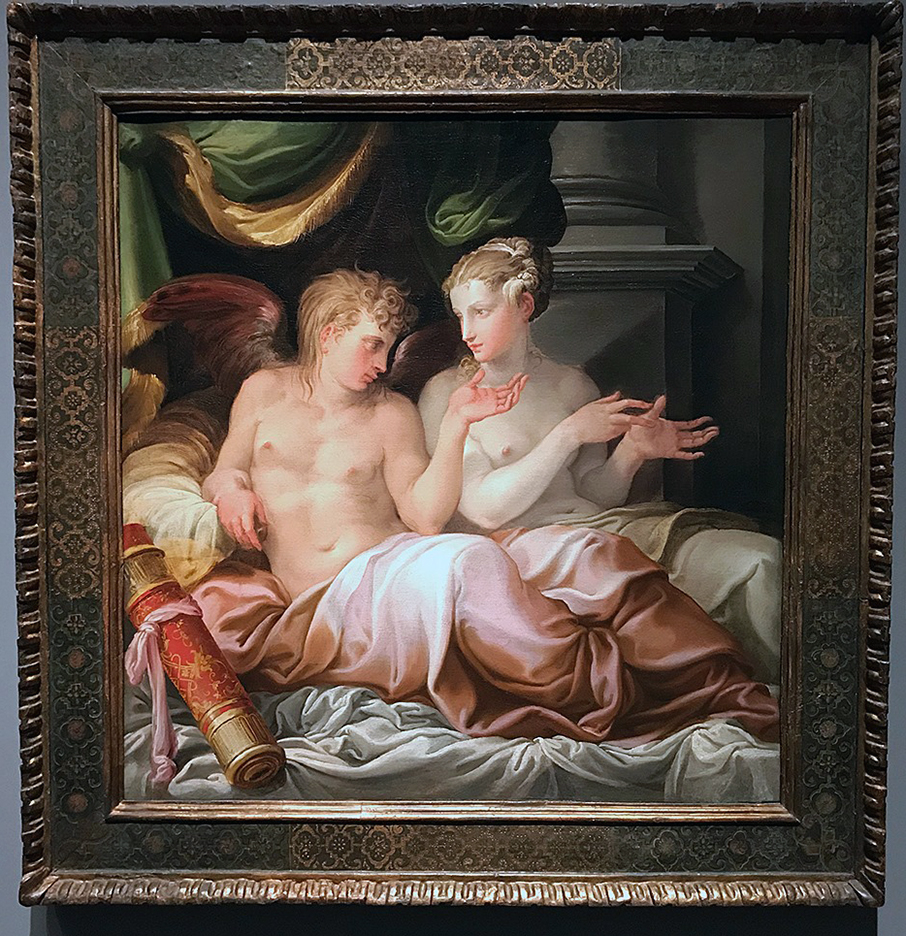
“Eros and Psyche,” 1500s oil on canvas by Niccolo dell’ Abbate, an Italian who lived from 1509/12-1571. Hey, records have holes. Here’s more about Eros and Psyche.
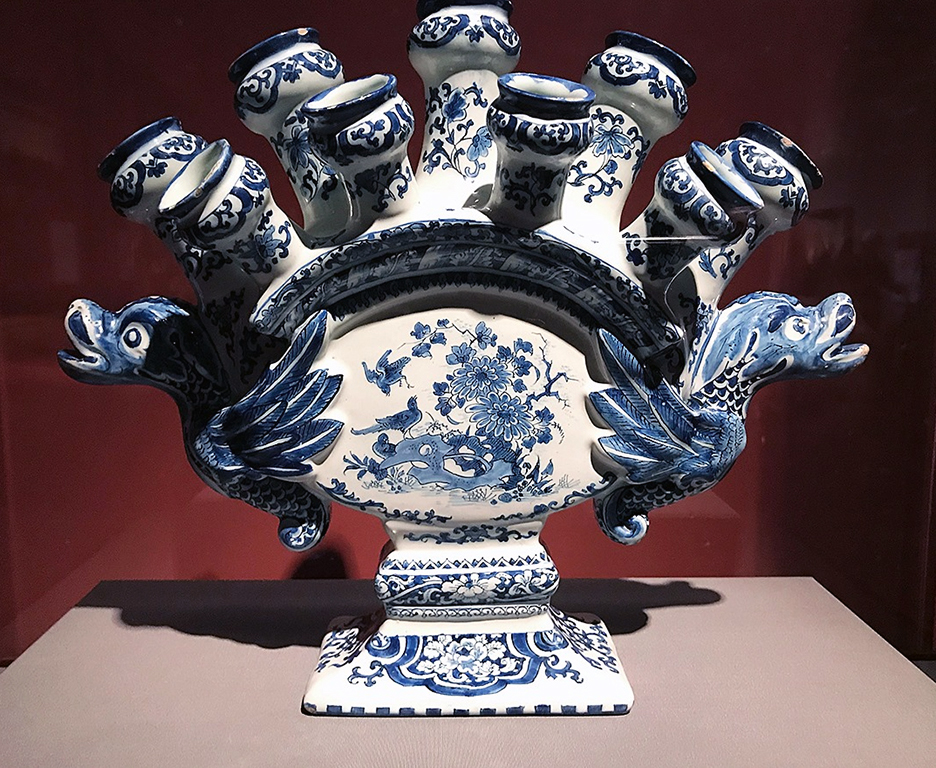
“Specially designed to showcase every bloom of an arrangement, this vase would have been quite costly. But during the 1600s, the flowers the vase held were often a greater expense; the cost of an especially rare tulip bulb could equal a carpenter’s annual salary,” according to the DIA. Vase (1690-1700) from the Dutch Golden Age, in which the Dutch were among the richest people in the world and wealth was spread broadly throughout society. Tin-glazed earthenware with enamel decoration attributed to De Grieksche A Factory, Delft, The Netherlands.
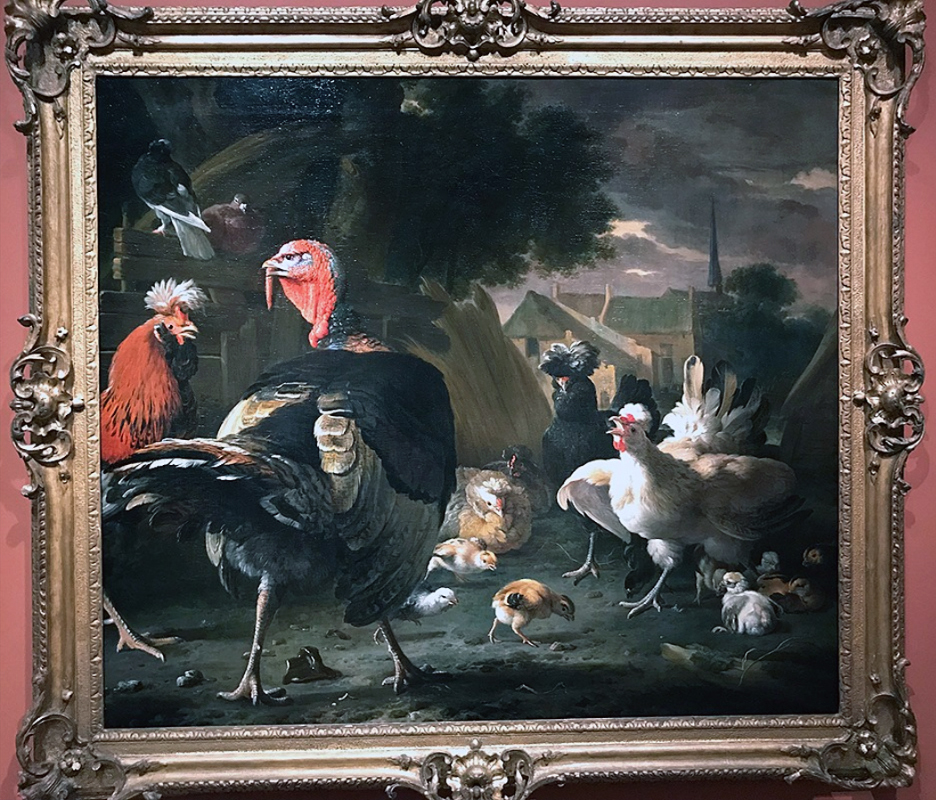
“Poultry Yard,” 1668, Melchior de Hondecoeter. Apparently one aspect of the Dutch Golden Age was bragging about all the food they had, from game to carrots, while much of Europe struggled.

 Beth's Planet
Leave a comment