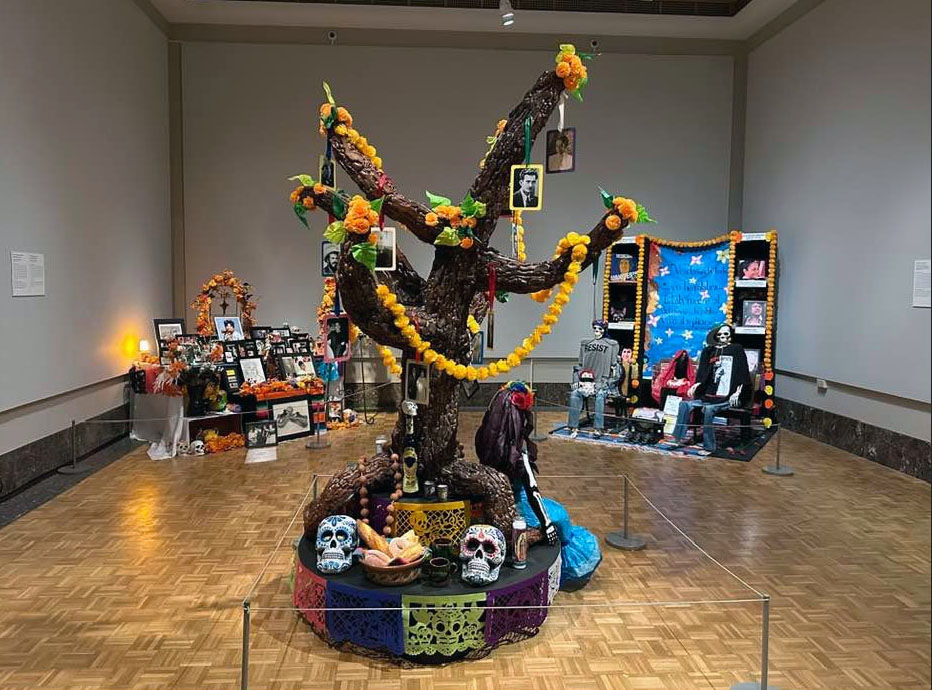
We viewed Day of the Dead ofrendas at the Detroit Institute of Arts, one of my happy places. There were a number of interesting takes among the 13 displays by local artists and community members; I favored the ones that were not “basic shrines” (sorry, horrible phrase) and appreciated the Tree of Life approach. Sunday is the last day for the exhibit.
I was very excited about an exhibit built around Surrealism. Some of my favorites:
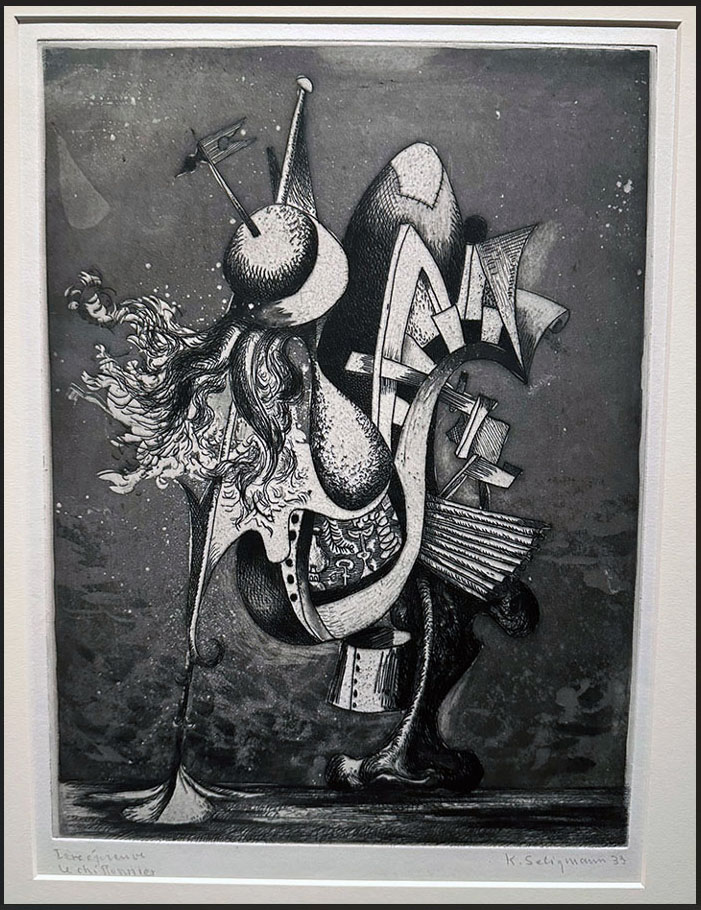
“The Rag Picker” by Kurt Seligmann, 1933, etching and aquatint printed in black ink on wove paper. The notes say the artist “combines biomorphic forms with representations of household goods to evoke a human figure. The rag picker was a well-known Parisian type, a professional collector and sorter of discarded items, often viewed as an outsider, free from bourgeois convention. The activity of rag picking served as a metaphor for the surrealist method of finding materials by chance and combining them in unexpected ways.”

“Bather by the Sea (Dora Maar)” by Pablo Picasso, 1939, gouache on laid paper. Picasso and Maar, a photographer, were lovers for a decade. In July 1939 they rented Man Ray’s French Riviera apartment and went to the beach every morning. “Picasso depicts Maar adjusting her hat, seen from multiple angles with her head doubled. Although Maar is recognizable, this is not a portrait but rather a variation on the theme of a bather.”

“Early Morning, Grande Bleue” by Guy Pene du Bois, 1929, watercolor and pen and ink over graphite on wove paper. “This vivid watercolor satirizes the fashion for bathing at Nice,” say the notes; “La Grande Bleue” is a term for the Mediterranean Sea.

“Lamplighter at the Corner of the Rue Emilie-Richard and the Boulevard Edgar-Quinet” by Brassai, between 1931 and 1932, gelatin silver print.
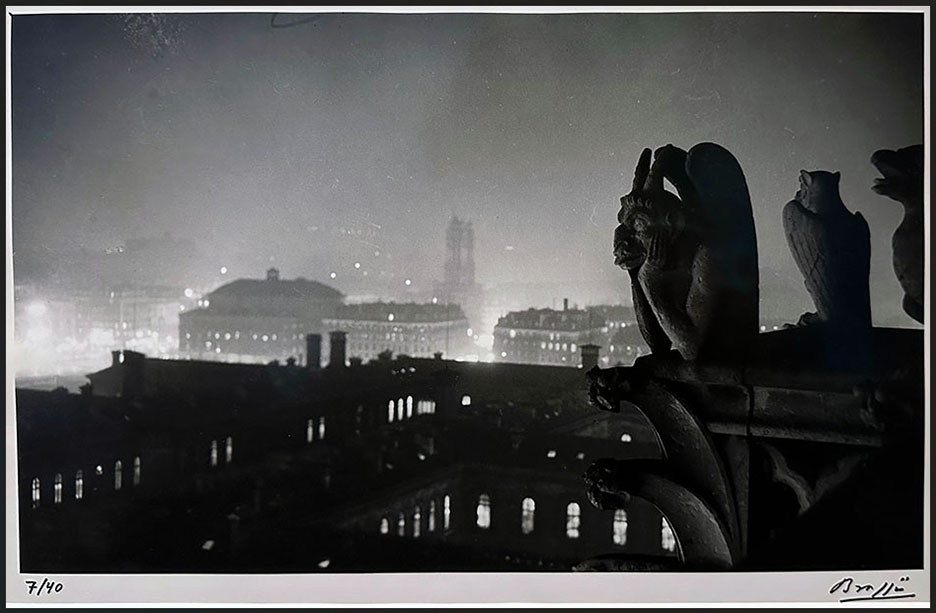
“Paris View from Notre Dame” by Brassai, 1934, gelatin silver print. The artist bribed the cathedral caretaker and climbed the stairs in the dark with his tripod camera.
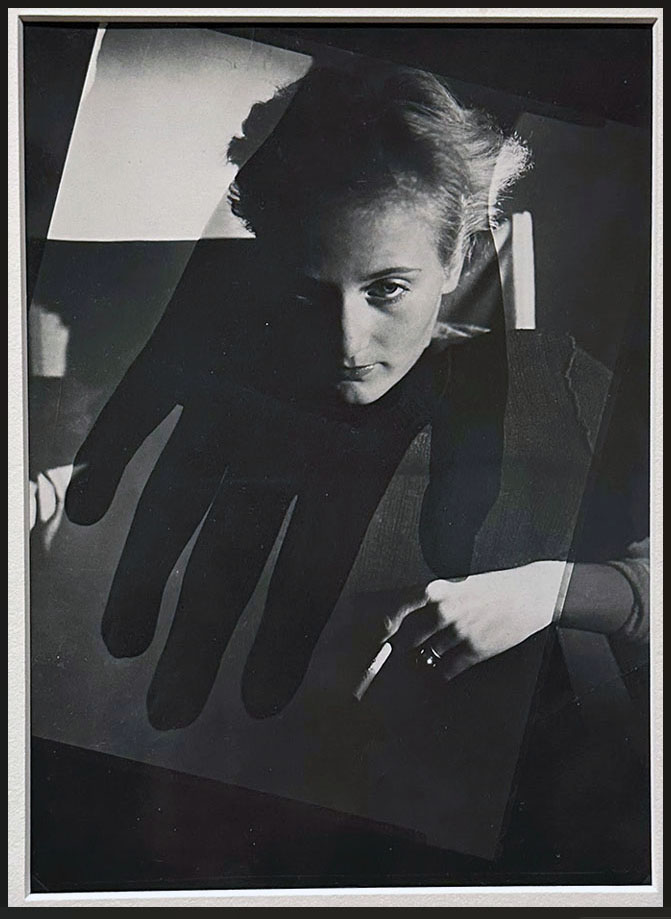
“Mary Glory, Paris” by Maurice Tabard, 1929, gelatin silver print. This might be my favorite of the day.

“Place de l’Opera, Paris” by Rene Magritte, 1929. He “combined negatives to place the Paris Opera House in a field with grazing cows, satirizing the center of the French cultural establishment as no more than a rural farm building.”
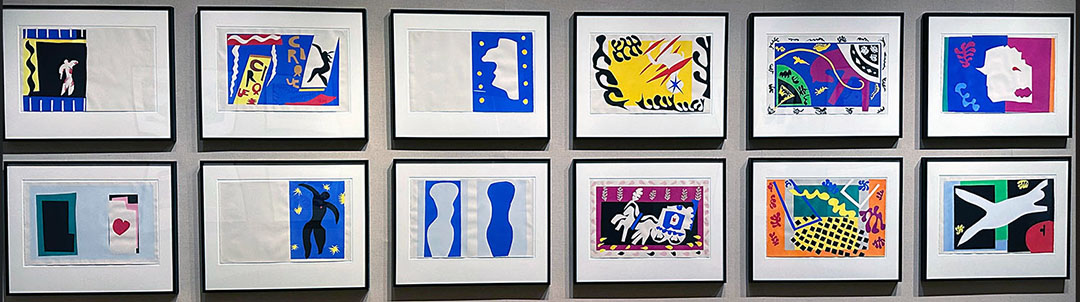
Henri Matisse’s “Jazz” series, 1943-44
Top from left, The Clown | The Circus | Monsieur Loyal | The Nightmare of the White Elephant | The Horse, The Rider, and The Clown | The Wolf
Bottom from left, The Heart | Icarus | Forms | Pierrot’s Funeral | The Codomas | The Swimmer in the Tank

“The Horse, The Rider, and The Clown,” from Henri Matisse’s “Jazz” series. After an operation in January 1941, Matisse was confined to his bed and could not paint. He returned to a practice he started in the early 1930s, using colorfully painted pieces of paper to create compositions. His assistant and others painted gouache onto paper, which Matisse cut into shapes. Then he directed his assistant in pinning the papers onto the wall. The finalized collages were translated into stencils for printing through a process called pochoir. Matisse said, “Drawing with scissors: To cut to the quick in color reminds me of the direct cutting of sculptors.”

 Beth's Planet
Leave a comment